
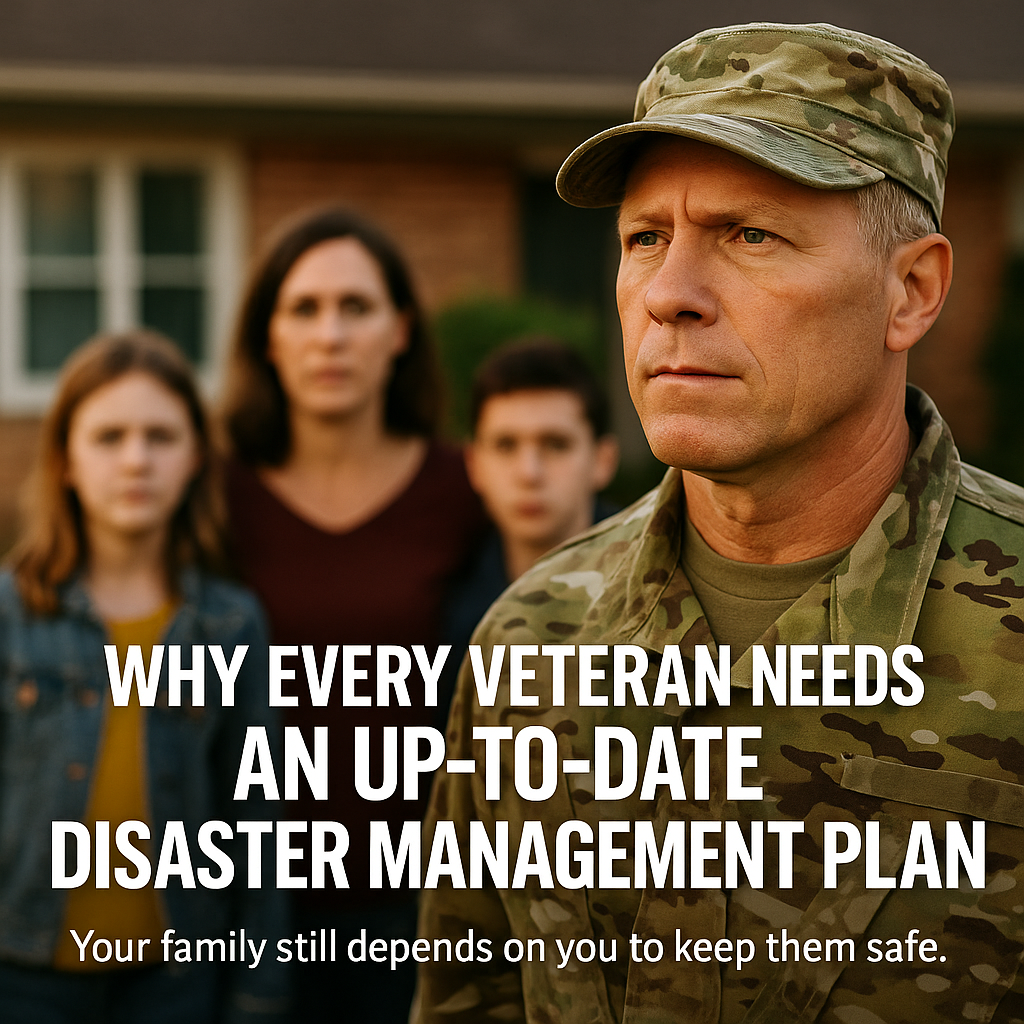
Veterans never stop serving. Even after the uniform is folded away, many step right
back onto the front lines as firefighters, police officers, EMTs, and emergency
volunteers. But while you run toward danger, one truth remains:
Your family still depends on you to keep them safe.
An updated Disaster Management Plan for veterans ensures your loved ones are
protected; physically, emotionally, and financially so you can serve your community
without hesitation or fear.
Why Preparedness Matters More for Veterans
Veterans are often first to respond when disaster strikes. That responsibility requires
clarity at home. When your family knows exactly what to do, where to go, who to call,
and how to stay safe. You gain the confidence to focus on the mission in front of you.
A prepared family removes the emotional conflict between duty and home. It gives you
peace of mind that your loved ones can navigate emergencies even if you can’t
immediately be there.
Four Key Benefits of a Veteran-Led Disaster Plan
- Physical Protection
A solid plan covers evacuation routes, meeting points, medical needs, supplies, and
home safety measures. It lowers risk and helps your family avoid injury during fires,
storms, blackouts, or civil emergencies. - Emotional Stability
Fear comes from uncertainty. A plan creates confidence. When your family knows what
to expect, anxiety goes down and resilience goes up. You give them structure, calm,
and a sense of control. - Social Strength
Prepared veterans strengthen entire communities. When your home is secure, you’re
free to step forward as a leader—assisting neighbors, supporting response efforts, and
stabilizing chaos instead of being overwhelmed by it. - Leadership & Communication
Veterans excel at structure, training, and decisive action. A disaster plan channels those
strengths into your household through clear communication protocols, responsibilities,
and recovery steps.
What Makes a Veteran’s Plan Different?
Veterans understand risk, logistics, and the consequences of hesitation. You bring:
Tactical thinking
Discipline in execution
Experience under pressure
A protector’s mindset
Your family benefits from that leadership when their world becomes uncertain.
What Your Plan Should Include
A family communication plan
Emergency contacts
Evacuation routes and meeting points
A stocked disaster kit
Medication and document storage
Simple household training (utilities shut off, fire extinguisher use, first aid basics)
Preparedness doesn’t need to be complicated; it simply needs to be current.
Conclusion: Protect Your Family. Strengthen Your Mission.
Veterans are the backbone of community safety. But no one can lead effectively if
they’re worried about home. An up-to-date Disaster Management Plan protects your
family, supports your service, and strengthens your impact on the community.
Preparedness is leadership. And leadership begins at home.
About the Author
Daniel Kilburn is a U.S. Army Veteran, retired Senior Infantry Drill Sergeant, and
Noncommissioned Officers Academy instructor, including a distinguished tour at the
United States Army Sergeants Major Academy. With decades of expertise in
leadership, crisis readiness, and family resilience, he has trained thousands of service
members, shaping the next generation of military leaders.
Today, Daniel is the Founder of Emergency Action Planning LLC and a #1 best-
selling author, dedicating his work to helping veterans, families, and first responders
build clear, effective disaster and emergency plans that protect their loved ones and
strengthen their communities.
To assess your own preparedness, you can take the complimentary Disaster and
Emergency Planning Assessment at:
�� www.depassessment.com
Your readiness is your family’s greatest shield.